
Optimising Regional Freight: Road vs Air Comparison
Singapore occupies a pre-eminent position within the logistics network of Southeast Asia, primarily due to its sophisticated infrastructure and its status as a preferred hub for regional enterprises. While many organisations instinctively turn to maritime or aerial routes for their shipping requirements, road-based transport has developed into a swift and highly effective alternative for moving inventory between Malaysia and Singapore. This specific mode of transit offers a compelling mixture of speed and affordability, catering to a diverse array of businesses ranging from digital retailers to exporters of bulk industrial commodities. Developing a comprehensive understanding of how road haulage operates in this corridor allows business leaders to make more informed and strategic shipping decisions.
Selecting the most appropriate freight method is a vital strategic task that directly influences inventory cycles and overall supply chain resilience. The choice between land and air extends far beyond a simple comparison of base rates; it requires a deep analysis of total costs, cargo characteristics, and delivery timelines. This guide examines the fundamental mechanics and ideal use cases for both modes to clarify when land transport is the superior choice and when the premium for air speed is a necessary investment. By aligning operational needs with commercial objectives, businesses can ensure their goods reach their destination as efficiently and cost-effectively as possible.
Key Takeaways:
- Road freight provides the best value for the regional corridor by balancing speed and cost.
- Air shipping is reserved for extreme urgency, but it costs significantly more than road shipping.
- Total shipping costs include door-to-door convenience and lower packaging expenses.
- Physical dimensions and the nature of the goods often dictate the most suitable mode.
- Specialist logistics partners are essential for navigating customs and securing capacity.
Economic Benefits of Road Transport
For the geographically short but logistically dense journey across the border, road freight is frequently identified as the most strategic choice for regional companies. The primary advantage of this mode is its unbeatable cost efficiency for volume, particularly for businesses moving palletised goods or machinery. This is precisely why road-based cargo Malaysia options often prove more effective than air for bulky or heavy items. By choosing land transport, companies can significantly lower their cost per unit transported, which helps to protect profit margins in a competitive market.
A transparent and stable cost structure further supports financial efficiency in road haulage. Unlike air freight, which involves a base rate supplemented by fuel surcharges, security fees, and terminal handling charges, trucking typically offers a flat rate per vehicle or container. Furthermore, road transport allows for simpler and often reusable packaging solutions, whereas long-distance sea or air voyages may require more robust and expensive materials. When these factors are combined, the total cost of land-based logistics almost always outweighs the marginal time difference for routine stock transfers.
Operational Flexibility and Speed
Road transport offers a high degree of flexibility that air travel struggles to match, especially regarding daily schedules and door-to-door services. Reputable logistics providers can offer frequent daily departures and often accommodate last-minute bookings or shifts in the delivery schedule. This adaptability is essential for businesses that require a responsive supply chain to meet fluctuating market demands. The entire process is managed by a single team from the point of collection in Malaysia to final unloading in Singapore, which reduces administrative complexity and minimises potential points of failure.
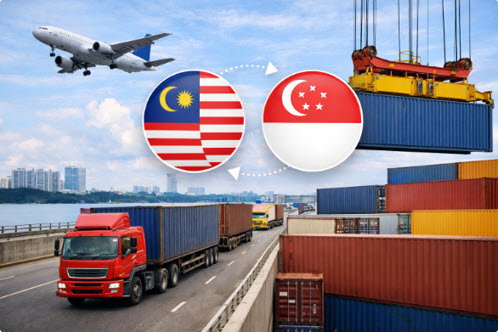
In terms of speed, road freight is remarkably competitive, typically trailing air shipping by only one day. For most regional requirements, a 1 to 3 day transit time is more than sufficient to keep inventory flowing smoothly. This mode is suitable for both small parcels and large bulk deliveries, allowing companies to scale their shipping according to their current needs. By utilising an integrated cargo delivery service, businesses can ensure that their inventory is moved directly from their premises to the final destination without the need for multiple handovers.
Handling Diverse Cargo Profiles
The choice between transport modes is often dictated by the physical dimensions and weight of the shipment. As a general rule, if a shipment occupies more than one standard pallet or exceeds two cubic metres in volume, road transport becomes exponentially more economical. Air freight charges are based on the cubic nature and chargeable weight, which can make large or heavy items prohibitively expensive to move by plane. Therefore, road haulage is the preferred choice for industrial equipment, furniture, and other bulky commodities that require significant space.
Road transport also offers greater versatility for specific types of goods that may face restrictions in the air. For example, chemical-containing products, oversized machinery, and certain health or beauty items often perform better when moved over the road. Perishable goods such as fresh food or flowers also benefit from the direct and fast transit provided by refrigerated trucks. By matching the transport mode to the specific profile of the goods, companies can ensure that their inventory is handled most appropriately and cost-effectively.
The Specialised Niche for Air Freight
Air freight exists primarily to solve the problem of extreme time sensitivity in the supply chain. When a production line is halted while waiting for a critical component or a retail launch depends on a sample batch, air transport provides a solution that others cannot. Its primary strength lies in global long-distance speed, making it the ideal choice for connecting different continents. However, for the short route between Malaysia and Singapore, its advantage is less about distance and more about bypassing potential land-border delays in exceptional circumstances.
This mode is also highly suited for exceptionally high-value and low-weight items, such as jewellery or precision instruments. The security and rapid speed of air transport can justify the high price premium for these types of goods. Despite these benefits, businesses must be aware of the limitations, including steep premiums and limited capacity based on aircraft size. The process also involves multiple handovers—from road to air and back to road—which can increase the risk of handling errors and damage compared to direct trucking.
Navigating Customs and Compliance
Successful cross-border trucking requires a thorough understanding of customs procedures in both Malaysia and Singapore. At the Johor customs checkpoint, Malaysian officials inspect the shipment and documents to grant export clearance. Shippers must provide a commercial invoice, a packing list, and transport documents, while also ensuring that goods are correctly classified using the Harmonised System tariff codes. Registration with Malaysian authorities is also required for exporters shipping restricted items.
Upon arrival in Singapore, the cargo must undergo a second inspection to receive import approval. It is important to note that trucking deliveries do not benefit from the de minimis GST relief that applies to some air shipments. Consequently, a standard GST of 7% and various duties are typically charged based on the product type. Importers in Singapore must have a Unique Entity Number and an active customs account to facilitate duty payments through the GIRO system. Accurate documentation is vital at every stage to prevent the detention of the shipment or costly administrative delays.
Strategic Warehousing and Distribution
For organisations looking to use Singapore as a regional distribution centre, utilising warehousing within the Free Trade Zone is highly advisable. Storing inventory in these zones allows companies to delay the payment of taxes until the goods are actually distributed into the local market. This strategy is particularly effective for firms that require a central hub to manage their regional operations with agility and speed. By partnering with a reliable logistics firm that has access to these zones, businesses can improve their cash flow and enhance their regional distribution capabilities.
The integration of warehousing with road transport creates a seamless supply chain that can respond quickly to market fluctuations. Full truckload shipments can proceed directly from the warehouse to the final destination, while less-than-truckload shipments are sorted and dispatched in smaller vehicles. This flexibility allows businesses to maintain lean inventory levels while ensuring that their products are always available for their customers. By combining strategic warehousing with efficient road haulage, companies can build a resilient and cost-optimised logistics model for the regional market.
The Essential Role of Specialist Partners
Navigating the complexities of cross-border trade is not a core competency for most commercial enterprises. This is where a professional logistics provider transitions from a vendor to a strategic partner, offering expert advice on mode selection and cost optimisation. Leading firms, such as Evermarch Logistics, provide critical value by managing the complete documentation and customs brokerage process. Their expertise minimises the risk of delays or penalties caused by administrative errors, ensuring a smooth passage through land checkpoints.
Logistics partners with an Authorised Economic Operator status can offer significant advantages, such as faster clearance times and reduced inspection rates. They also provide real-time tracking and proactive communication, giving businesses end-to-end visibility and control over their shipments. Furthermore, these specialists can consolidate smaller shipments from multiple clients into cost-effective full container loads, passing on economies of scale to their clients. By partnering with a knowledgeable specialist, businesses can ensure that their cross-border logistics operations remain efficient, reliable, and high-performing.
Read another Article: Modern Solutions for Peninsula Logistics and Trade
